I watched a smaller fashion retailer slowly strangle their own business.
When Your Customer Journey Collapses Into a Single Click
2026
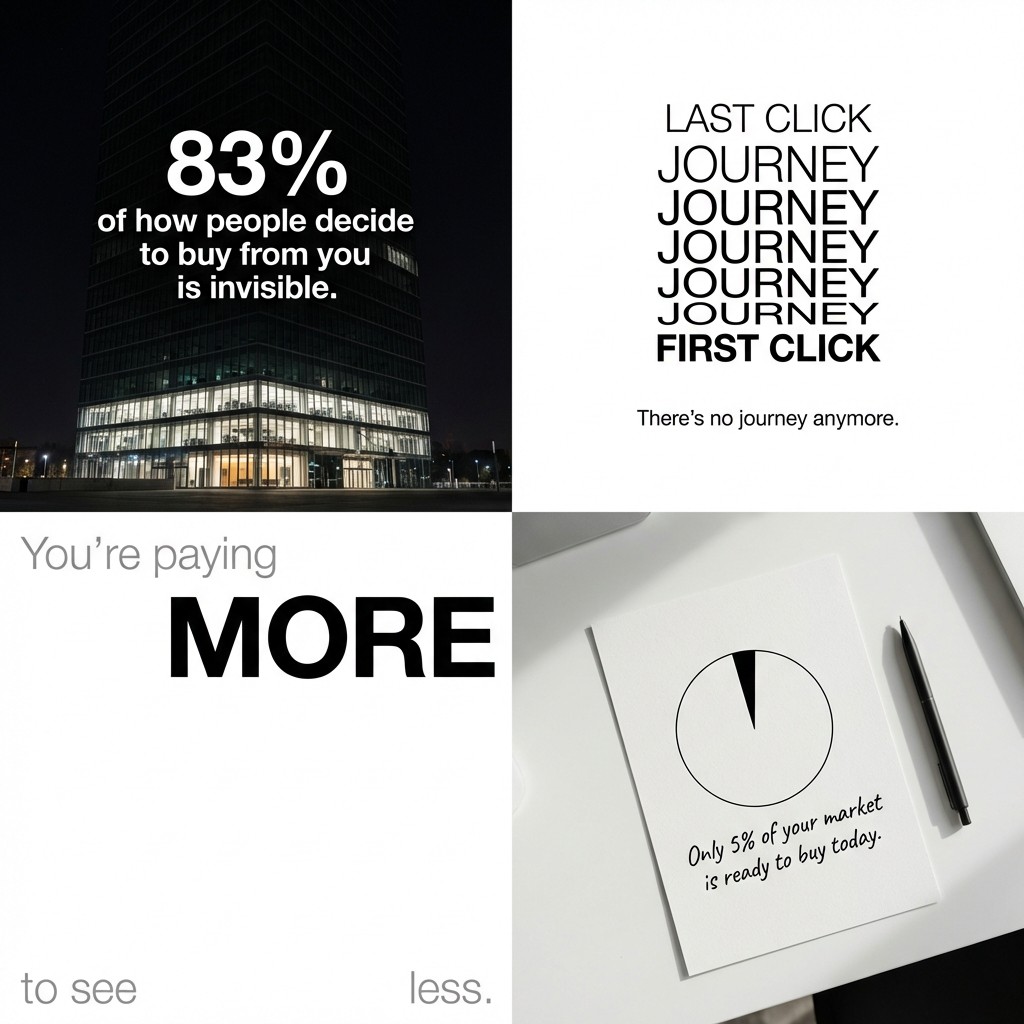
"When you can't track customers across multiple sessions, your entire customer journey collapses into a single moment. Last click becomes first click. There's no journey anymore—just 'did they buy or not?'"
Summary: Most brands are strangling their own growth by optimising for bottom-funnel metrics whilst ignoring 83% of the buyer journey that happens in tracking blind spots. When you can only measure the last click, you systematically underinvest in awareness, shrink your addressable market, and watch CPCs climb as you compete for an ever-smaller pool of ready buyers. This investigation reveals why tracking infrastructure matters more than attribution models—and what happens when you fix the fundamentals first.
1. The Tracking Collapse That's Bleeding You Dry
"83% of how people actually decide to buy from you is invisible."
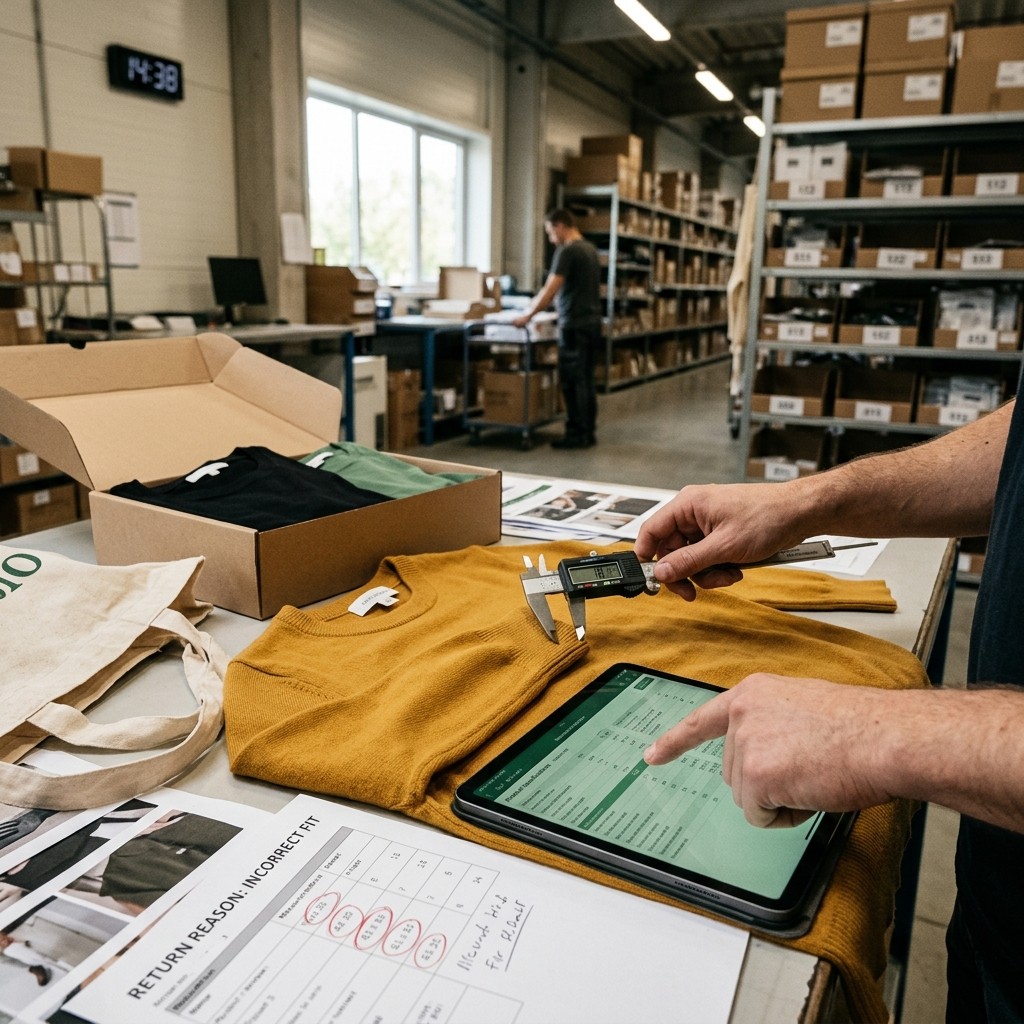
I watched a smaller fashion retailer slowly strangle their own business.
They were obsessed with ROAS. Every paid media channel had to justify itself in isolation. Google Performance Max was their golden child because the numbers looked good.
But here's what they missed: Performance Max was just remarketing to people who already knew them.
The pool of engaged customers kept shrinking. ROAS dropped. Revenue followed. Their solution? Discount harder. Cut prices to juice the numbers. They were removing profit from the business while calling it optimisation.
According to Gartner, 83% of the full buyer cycle now happens in tracking blind spots.
Read that again. 83% of how people actually decide to buy from you is invisible.
Traditional web analytics platforms track single sessions or channels. They can't connect online interactions with offline behaviours. They can't follow someone across devices. They can't see the three-week research phase that happened before someone finally clicked your ad.
You're flying blind through most of your customer's decision-making process.
I saw this firsthand with a major high-street fashion retailer. They implemented a full data-driven attribution model. Spent months on it. But they never set up server-side tracking. Their existing tracking wasn't even capturing the channel of acquisition correctly.
The result? They were massively underinvesting in Meta. Turns out Meta was driving significant brand awareness and recognition. But because they couldn't track the full journey, they kept cutting the budget for the channel that was actually filling their funnel.
2. Last-Click Attribution and the 95% You're Ignoring
"Only 5% of your total addressable market is actively in-market at any given time. If you focus exclusively on bottom-funnel activity, you're fighting over that tiny 5%."
Last-click attribution credits only the final touchpoint before conversion.
It ignores everything else. The ad that introduced your brand. The email that educated them. The social post that built trust. None of it counts.
Here's the problem with that logic: only 4% of internet users are clicking on ads. And studies show click-through rate has no connection to sales lift.
You're optimising for a metric that doesn't predict the outcome you actually want.
Brands that rely on last-click underinvest in upper-funnel channels. They can't directly tie awareness campaigns to conversions, so they assume those campaigns don't work. The budget flows to bottom-funnel tactics that can show immediate attribution.
This creates a vicious cycle. You stop filling the top of your funnel. Your addressable market shrinks. You're just converting a smaller and smaller pool of people who already know you.
LinkedIn's B2B Institute published research that should change how you think about your market.
Only 5% of your total addressable market is actively in-market at any given time.
The other 95%? They're not ready to buy yet. But they will be. Just not today.
If you focus exclusively on bottom-funnel activity, you're fighting over that tiny 5%. You're ignoring 95% of your potential opportunities.
Even more striking: 70% of the modern buyer journey takes place in the dark funnel. That's the early research phase before a prospect makes their intent known.
They're reading articles. Watching videos. Asking colleagues. Lurking in communities. All of it invisible to your tracking.
When they finally show intent, you see them for the first time. You think that's the beginning of their journey. It's actually the end.
3. The Vicious Cycle: Rising Costs Meet Shrinking Markets
"For most industries, the cost of acquiring a click is rising faster than inflation whilst your ability to track the journey deteriorates."
Today's conversion campaigns depend on yesterday's awareness efforts.
You can't skip to the end. You can't just run conversion campaigns and expect a steady stream of new customers. You're converting a pool that you're not refilling.
That fashion retailer I mentioned earlier learnt this the hard way. They were so focused on ROAS within each channel that they stopped investing in top-of-funnel activity entirely.
Performance Max kept remarketing to the same shrinking audience. New customer acquisition dried up. They had no one new to convert.
The fix? We opened up the top of the funnel. Lower cost, higher volume, high frequency activity across YouTube, Meta, and new-customer targeting Google campaigns.
Now we had engaged traffic browsing. Then we could turn our attention to getting them to shop and buy.
You have to fill the funnel before you can convert from it. This seems obvious when you say it out loud. But most brands are so focused on immediate ROAS that they forget this basic truth.
Meanwhile, your costs are climbing.
The average cost per click on Google Ads in 2025 is $4.51. In some industries, it's over $5.26.
CPCs are rising 10-15% year-over-year. From 2022 to 2023, average CPC increased by 5% whilst cost per lead rose by 20%.
The compound annual growth rate for CPCs in the U.S. is about 3.18%. But excluding outliers, it jumps to 4.02%, with a median of 4.37%.
For most industries, the cost of acquiring a click is rising faster than inflation.
You're paying more to see less. Your tracking is blind to most of the journey. Your costs are climbing. And you're optimising for the wrong metrics.
This is why addressable markets are shrinking. You can't see the full journey, so you optimise for the last click. You stop investing in awareness. Your pool of potential customers gets smaller. You compete harder for the same small group of in-market buyers. CPCs rise because everyone's fighting over the same 5%.
When you can't track across sessions, you get an incomplete understanding of your customer journey. Channels that play a crucial role in nurturing leads early in the journey receive less investment. You misallocate your marketing budget because you can't see which touchpoints actually matter.
This creates a vicious cycle:
You can't track the full journey
You optimise for what you can measure (last click)
You underinvest in upper-funnel channels
Your addressable market shrinks
You compete harder for fewer buyers
CPCs climb
Profitability drops
The solution isn't better attribution models. It's fixing your fundamental tracking first.
4. What Actually Works: Building Audiences Before Conversion
"People don't see your ad and immediately buy. They research. They compare. They add to cart and abandon. They come back later. If you're not tracking and nurturing them through that entire process, you're just hoping they remember you."
I worked with a premium men's retailer who paused all ads during Black Friday. They couldn't afford to compete with the big brands driving up CPCs.
They focused primarily on seasonal in-person events. E-commerce was just the retention channel after acquiring customers at shows. They had limited marketing budgets and historically turned off all paid campaigns through Black Friday.
Here's what we did differently:
Six to eight weeks before November, we invested in cheaper top-of-funnel activity.
We focused on CTR and engagement through changes in copy and creative. We tracked email sign-ups and add-to-cart behaviours as indicators of intent.
Then through Black Friday itself, we switched entirely into prospect remarketing and CRM. We drove an uplift in revenues and conversion from the audience we'd been building for two months.
This works because we acknowledged the reality of the customer journey. People don't see your ad and immediately buy during Black Friday. They research. They compare. They add to cart and abandon. They come back later.
If you're not tracking and nurturing them through that entire process, you're just hoping they remember you when they're ready to buy.
When you combine rising costs with an inability to track full journeys, you're essentially paying more to see less.
Market saturation is real. Competition is increasing. But the brands winning aren't the ones with the biggest budgets.
They're the ones who understand that customer journeys don't collapse into single clicks. They invest in awareness even when they can't directly attribute it. They fill their funnel consistently instead of just trying to convert a shrinking pool.
They recognise that 95% of their market isn't ready to buy today. But they will be. And when they are, they'll remember the brand that was there during their research phase.
5. Fix Your Tracking Infrastructure, Then Fix Your Strategy
"Your customer journey doesn't start with the last click. It starts weeks or months earlier. If you can't track that journey, you're making decisions based on incomplete data."
Your customer journey doesn't start with the last click. It starts weeks or months earlier.
If you can't track that journey, you're making decisions based on incomplete data. You're crediting the wrong channels. You're underinvesting in the touchpoints that actually drive awareness and consideration.
The brands obsessed with bottom-funnel ROAS are watching their addressable markets shrink. They're paying more for clicks. They're converting smaller pools of prospects. They're discounting to maintain revenue whilst profit disappears.
The alternative is simple but not easy: Fix your tracking first. Then fix your strategy.
Invest in awareness even when you can't perfectly attribute it. Fill your funnel consistently. Track engagement and intent signals, not just conversions. Build audiences over time instead of trying to convert cold traffic immediately.
Your customer journey is longer than a single click. Your strategy should reflect that reality.

I watched a smaller fashion retailer slowly strangle their own business.
When Your Customer Journey Collapses Into a Single Click
2026
"When you can't track customers across multiple sessions, your entire customer journey collapses into a single moment. Last click becomes first click. There's no journey anymore—just 'did they buy or not?'"
Summary: Most brands are strangling their own growth by optimising for bottom-funnel metrics whilst ignoring 83% of the buyer journey that happens in tracking blind spots. When you can only measure the last click, you systematically underinvest in awareness, shrink your addressable market, and watch CPCs climb as you compete for an ever-smaller pool of ready buyers. This investigation reveals why tracking infrastructure matters more than attribution models—and what happens when you fix the fundamentals first.
1. The Tracking Collapse That's Bleeding You Dry
"83% of how people actually decide to buy from you is invisible."
I watched a smaller fashion retailer slowly strangle their own business.
They were obsessed with ROAS. Every paid media channel had to justify itself in isolation. Google Performance Max was their golden child because the numbers looked good.
But here's what they missed: Performance Max was just remarketing to people who already knew them.
The pool of engaged customers kept shrinking. ROAS dropped. Revenue followed. Their solution? Discount harder. Cut prices to juice the numbers. They were removing profit from the business while calling it optimisation.
According to Gartner, 83% of the full buyer cycle now happens in tracking blind spots.
Read that again. 83% of how people actually decide to buy from you is invisible.
Traditional web analytics platforms track single sessions or channels. They can't connect online interactions with offline behaviours. They can't follow someone across devices. They can't see the three-week research phase that happened before someone finally clicked your ad.
You're flying blind through most of your customer's decision-making process.
I saw this firsthand with a major high-street fashion retailer. They implemented a full data-driven attribution model. Spent months on it. But they never set up server-side tracking. Their existing tracking wasn't even capturing the channel of acquisition correctly.
The result? They were massively underinvesting in Meta. Turns out Meta was driving significant brand awareness and recognition. But because they couldn't track the full journey, they kept cutting the budget for the channel that was actually filling their funnel.
2. Last-Click Attribution and the 95% You're Ignoring
"Only 5% of your total addressable market is actively in-market at any given time. If you focus exclusively on bottom-funnel activity, you're fighting over that tiny 5%."
Last-click attribution credits only the final touchpoint before conversion.
It ignores everything else. The ad that introduced your brand. The email that educated them. The social post that built trust. None of it counts.
Here's the problem with that logic: only 4% of internet users are clicking on ads. And studies show click-through rate has no connection to sales lift.
You're optimising for a metric that doesn't predict the outcome you actually want.
Brands that rely on last-click underinvest in upper-funnel channels. They can't directly tie awareness campaigns to conversions, so they assume those campaigns don't work. The budget flows to bottom-funnel tactics that can show immediate attribution.
This creates a vicious cycle. You stop filling the top of your funnel. Your addressable market shrinks. You're just converting a smaller and smaller pool of people who already know you.
LinkedIn's B2B Institute published research that should change how you think about your market.
Only 5% of your total addressable market is actively in-market at any given time.
The other 95%? They're not ready to buy yet. But they will be. Just not today.
If you focus exclusively on bottom-funnel activity, you're fighting over that tiny 5%. You're ignoring 95% of your potential opportunities.
Even more striking: 70% of the modern buyer journey takes place in the dark funnel. That's the early research phase before a prospect makes their intent known.
They're reading articles. Watching videos. Asking colleagues. Lurking in communities. All of it invisible to your tracking.
When they finally show intent, you see them for the first time. You think that's the beginning of their journey. It's actually the end.
3. The Vicious Cycle: Rising Costs Meet Shrinking Markets
"For most industries, the cost of acquiring a click is rising faster than inflation whilst your ability to track the journey deteriorates."
Today's conversion campaigns depend on yesterday's awareness efforts.
You can't skip to the end. You can't just run conversion campaigns and expect a steady stream of new customers. You're converting a pool that you're not refilling.
That fashion retailer I mentioned earlier learnt this the hard way. They were so focused on ROAS within each channel that they stopped investing in top-of-funnel activity entirely.
Performance Max kept remarketing to the same shrinking audience. New customer acquisition dried up. They had no one new to convert.
The fix? We opened up the top of the funnel. Lower cost, higher volume, high frequency activity across YouTube, Meta, and new-customer targeting Google campaigns.
Now we had engaged traffic browsing. Then we could turn our attention to getting them to shop and buy.
You have to fill the funnel before you can convert from it. This seems obvious when you say it out loud. But most brands are so focused on immediate ROAS that they forget this basic truth.
Meanwhile, your costs are climbing.
The average cost per click on Google Ads in 2025 is $4.51. In some industries, it's over $5.26.
CPCs are rising 10-15% year-over-year. From 2022 to 2023, average CPC increased by 5% whilst cost per lead rose by 20%.
The compound annual growth rate for CPCs in the U.S. is about 3.18%. But excluding outliers, it jumps to 4.02%, with a median of 4.37%.
For most industries, the cost of acquiring a click is rising faster than inflation.
You're paying more to see less. Your tracking is blind to most of the journey. Your costs are climbing. And you're optimising for the wrong metrics.
This is why addressable markets are shrinking. You can't see the full journey, so you optimise for the last click. You stop investing in awareness. Your pool of potential customers gets smaller. You compete harder for the same small group of in-market buyers. CPCs rise because everyone's fighting over the same 5%.
When you can't track across sessions, you get an incomplete understanding of your customer journey. Channels that play a crucial role in nurturing leads early in the journey receive less investment. You misallocate your marketing budget because you can't see which touchpoints actually matter.
This creates a vicious cycle:
You can't track the full journey
You optimise for what you can measure (last click)
You underinvest in upper-funnel channels
Your addressable market shrinks
You compete harder for fewer buyers
CPCs climb
Profitability drops
The solution isn't better attribution models. It's fixing your fundamental tracking first.
4. What Actually Works: Building Audiences Before Conversion
"People don't see your ad and immediately buy. They research. They compare. They add to cart and abandon. They come back later. If you're not tracking and nurturing them through that entire process, you're just hoping they remember you."
I worked with a premium men's retailer who paused all ads during Black Friday. They couldn't afford to compete with the big brands driving up CPCs.
They focused primarily on seasonal in-person events. E-commerce was just the retention channel after acquiring customers at shows. They had limited marketing budgets and historically turned off all paid campaigns through Black Friday.
Here's what we did differently:
Six to eight weeks before November, we invested in cheaper top-of-funnel activity.
We focused on CTR and engagement through changes in copy and creative. We tracked email sign-ups and add-to-cart behaviours as indicators of intent.
Then through Black Friday itself, we switched entirely into prospect remarketing and CRM. We drove an uplift in revenues and conversion from the audience we'd been building for two months.
This works because we acknowledged the reality of the customer journey. People don't see your ad and immediately buy during Black Friday. They research. They compare. They add to cart and abandon. They come back later.
If you're not tracking and nurturing them through that entire process, you're just hoping they remember you when they're ready to buy.
When you combine rising costs with an inability to track full journeys, you're essentially paying more to see less.
Market saturation is real. Competition is increasing. But the brands winning aren't the ones with the biggest budgets.
They're the ones who understand that customer journeys don't collapse into single clicks. They invest in awareness even when they can't directly attribute it. They fill their funnel consistently instead of just trying to convert a shrinking pool.
They recognise that 95% of their market isn't ready to buy today. But they will be. And when they are, they'll remember the brand that was there during their research phase.
5. Fix Your Tracking Infrastructure, Then Fix Your Strategy
"Your customer journey doesn't start with the last click. It starts weeks or months earlier. If you can't track that journey, you're making decisions based on incomplete data."
Your customer journey doesn't start with the last click. It starts weeks or months earlier.
If you can't track that journey, you're making decisions based on incomplete data. You're crediting the wrong channels. You're underinvesting in the touchpoints that actually drive awareness and consideration.
The brands obsessed with bottom-funnel ROAS are watching their addressable markets shrink. They're paying more for clicks. They're converting smaller pools of prospects. They're discounting to maintain revenue whilst profit disappears.
The alternative is simple but not easy: Fix your tracking first. Then fix your strategy.
Invest in awareness even when you can't perfectly attribute it. Fill your funnel consistently. Track engagement and intent signals, not just conversions. Build audiences over time instead of trying to convert cold traffic immediately.
Your customer journey is longer than a single click. Your strategy should reflect that reality.
I watched a smaller fashion retailer slowly strangle their own business.
When Your Customer Journey Collapses Into a Single Click
2026
"When you can't track customers across multiple sessions, your entire customer journey collapses into a single moment. Last click becomes first click. There's no journey anymore—just 'did they buy or not?'"
Summary: Most brands are strangling their own growth by optimising for bottom-funnel metrics whilst ignoring 83% of the buyer journey that happens in tracking blind spots. When you can only measure the last click, you systematically underinvest in awareness, shrink your addressable market, and watch CPCs climb as you compete for an ever-smaller pool of ready buyers. This investigation reveals why tracking infrastructure matters more than attribution models—and what happens when you fix the fundamentals first.
1. The Tracking Collapse That's Bleeding You Dry
"83% of how people actually decide to buy from you is invisible."
I watched a smaller fashion retailer slowly strangle their own business.
They were obsessed with ROAS. Every paid media channel had to justify itself in isolation. Google Performance Max was their golden child because the numbers looked good.
But here's what they missed: Performance Max was just remarketing to people who already knew them.
The pool of engaged customers kept shrinking. ROAS dropped. Revenue followed. Their solution? Discount harder. Cut prices to juice the numbers. They were removing profit from the business while calling it optimisation.
According to Gartner, 83% of the full buyer cycle now happens in tracking blind spots.
Read that again. 83% of how people actually decide to buy from you is invisible.
Traditional web analytics platforms track single sessions or channels. They can't connect online interactions with offline behaviours. They can't follow someone across devices. They can't see the three-week research phase that happened before someone finally clicked your ad.
You're flying blind through most of your customer's decision-making process.
I saw this firsthand with a major high-street fashion retailer. They implemented a full data-driven attribution model. Spent months on it. But they never set up server-side tracking. Their existing tracking wasn't even capturing the channel of acquisition correctly.
The result? They were massively underinvesting in Meta. Turns out Meta was driving significant brand awareness and recognition. But because they couldn't track the full journey, they kept cutting the budget for the channel that was actually filling their funnel.
2. Last-Click Attribution and the 95% You're Ignoring
"Only 5% of your total addressable market is actively in-market at any given time. If you focus exclusively on bottom-funnel activity, you're fighting over that tiny 5%."
Last-click attribution credits only the final touchpoint before conversion.
It ignores everything else. The ad that introduced your brand. The email that educated them. The social post that built trust. None of it counts.
Here's the problem with that logic: only 4% of internet users are clicking on ads. And studies show click-through rate has no connection to sales lift.
You're optimising for a metric that doesn't predict the outcome you actually want.
Brands that rely on last-click underinvest in upper-funnel channels. They can't directly tie awareness campaigns to conversions, so they assume those campaigns don't work. The budget flows to bottom-funnel tactics that can show immediate attribution.
This creates a vicious cycle. You stop filling the top of your funnel. Your addressable market shrinks. You're just converting a smaller and smaller pool of people who already know you.
LinkedIn's B2B Institute published research that should change how you think about your market.
Only 5% of your total addressable market is actively in-market at any given time.
The other 95%? They're not ready to buy yet. But they will be. Just not today.
If you focus exclusively on bottom-funnel activity, you're fighting over that tiny 5%. You're ignoring 95% of your potential opportunities.
Even more striking: 70% of the modern buyer journey takes place in the dark funnel. That's the early research phase before a prospect makes their intent known.
They're reading articles. Watching videos. Asking colleagues. Lurking in communities. All of it invisible to your tracking.
When they finally show intent, you see them for the first time. You think that's the beginning of their journey. It's actually the end.
3. The Vicious Cycle: Rising Costs Meet Shrinking Markets
"For most industries, the cost of acquiring a click is rising faster than inflation whilst your ability to track the journey deteriorates."
Today's conversion campaigns depend on yesterday's awareness efforts.
You can't skip to the end. You can't just run conversion campaigns and expect a steady stream of new customers. You're converting a pool that you're not refilling.
That fashion retailer I mentioned earlier learnt this the hard way. They were so focused on ROAS within each channel that they stopped investing in top-of-funnel activity entirely.
Performance Max kept remarketing to the same shrinking audience. New customer acquisition dried up. They had no one new to convert.
The fix? We opened up the top of the funnel. Lower cost, higher volume, high frequency activity across YouTube, Meta, and new-customer targeting Google campaigns.
Now we had engaged traffic browsing. Then we could turn our attention to getting them to shop and buy.
You have to fill the funnel before you can convert from it. This seems obvious when you say it out loud. But most brands are so focused on immediate ROAS that they forget this basic truth.
Meanwhile, your costs are climbing.
The average cost per click on Google Ads in 2025 is $4.51. In some industries, it's over $5.26.
CPCs are rising 10-15% year-over-year. From 2022 to 2023, average CPC increased by 5% whilst cost per lead rose by 20%.
The compound annual growth rate for CPCs in the U.S. is about 3.18%. But excluding outliers, it jumps to 4.02%, with a median of 4.37%.
For most industries, the cost of acquiring a click is rising faster than inflation.
You're paying more to see less. Your tracking is blind to most of the journey. Your costs are climbing. And you're optimising for the wrong metrics.
This is why addressable markets are shrinking. You can't see the full journey, so you optimise for the last click. You stop investing in awareness. Your pool of potential customers gets smaller. You compete harder for the same small group of in-market buyers. CPCs rise because everyone's fighting over the same 5%.
When you can't track across sessions, you get an incomplete understanding of your customer journey. Channels that play a crucial role in nurturing leads early in the journey receive less investment. You misallocate your marketing budget because you can't see which touchpoints actually matter.
This creates a vicious cycle:
You can't track the full journey
You optimise for what you can measure (last click)
You underinvest in upper-funnel channels
Your addressable market shrinks
You compete harder for fewer buyers
CPCs climb
Profitability drops
The solution isn't better attribution models. It's fixing your fundamental tracking first.
4. What Actually Works: Building Audiences Before Conversion
"People don't see your ad and immediately buy. They research. They compare. They add to cart and abandon. They come back later. If you're not tracking and nurturing them through that entire process, you're just hoping they remember you."
I worked with a premium men's retailer who paused all ads during Black Friday. They couldn't afford to compete with the big brands driving up CPCs.
They focused primarily on seasonal in-person events. E-commerce was just the retention channel after acquiring customers at shows. They had limited marketing budgets and historically turned off all paid campaigns through Black Friday.
Here's what we did differently:
Six to eight weeks before November, we invested in cheaper top-of-funnel activity.
We focused on CTR and engagement through changes in copy and creative. We tracked email sign-ups and add-to-cart behaviours as indicators of intent.
Then through Black Friday itself, we switched entirely into prospect remarketing and CRM. We drove an uplift in revenues and conversion from the audience we'd been building for two months.
This works because we acknowledged the reality of the customer journey. People don't see your ad and immediately buy during Black Friday. They research. They compare. They add to cart and abandon. They come back later.
If you're not tracking and nurturing them through that entire process, you're just hoping they remember you when they're ready to buy.
When you combine rising costs with an inability to track full journeys, you're essentially paying more to see less.
Market saturation is real. Competition is increasing. But the brands winning aren't the ones with the biggest budgets.
They're the ones who understand that customer journeys don't collapse into single clicks. They invest in awareness even when they can't directly attribute it. They fill their funnel consistently instead of just trying to convert a shrinking pool.
They recognise that 95% of their market isn't ready to buy today. But they will be. And when they are, they'll remember the brand that was there during their research phase.
5. Fix Your Tracking Infrastructure, Then Fix Your Strategy
"Your customer journey doesn't start with the last click. It starts weeks or months earlier. If you can't track that journey, you're making decisions based on incomplete data."
Your customer journey doesn't start with the last click. It starts weeks or months earlier.
If you can't track that journey, you're making decisions based on incomplete data. You're crediting the wrong channels. You're underinvesting in the touchpoints that actually drive awareness and consideration.
The brands obsessed with bottom-funnel ROAS are watching their addressable markets shrink. They're paying more for clicks. They're converting smaller pools of prospects. They're discounting to maintain revenue whilst profit disappears.
The alternative is simple but not easy: Fix your tracking first. Then fix your strategy.
Invest in awareness even when you can't perfectly attribute it. Fill your funnel consistently. Track engagement and intent signals, not just conversions. Build audiences over time instead of trying to convert cold traffic immediately.
Your customer journey is longer than a single click. Your strategy should reflect that reality.