I had a conversation last week with a founder who'd just secured Q2 budget approval for a significant marketing push ahead of Q4.
More Traffic Won't Fix a Broken Business Model—It Will Just Break It Faster
2026
Recently I spoke with a founder who'd just secured Q2 budget approval for a significant marketing push ahead of Q4.
Brilliant news, right?
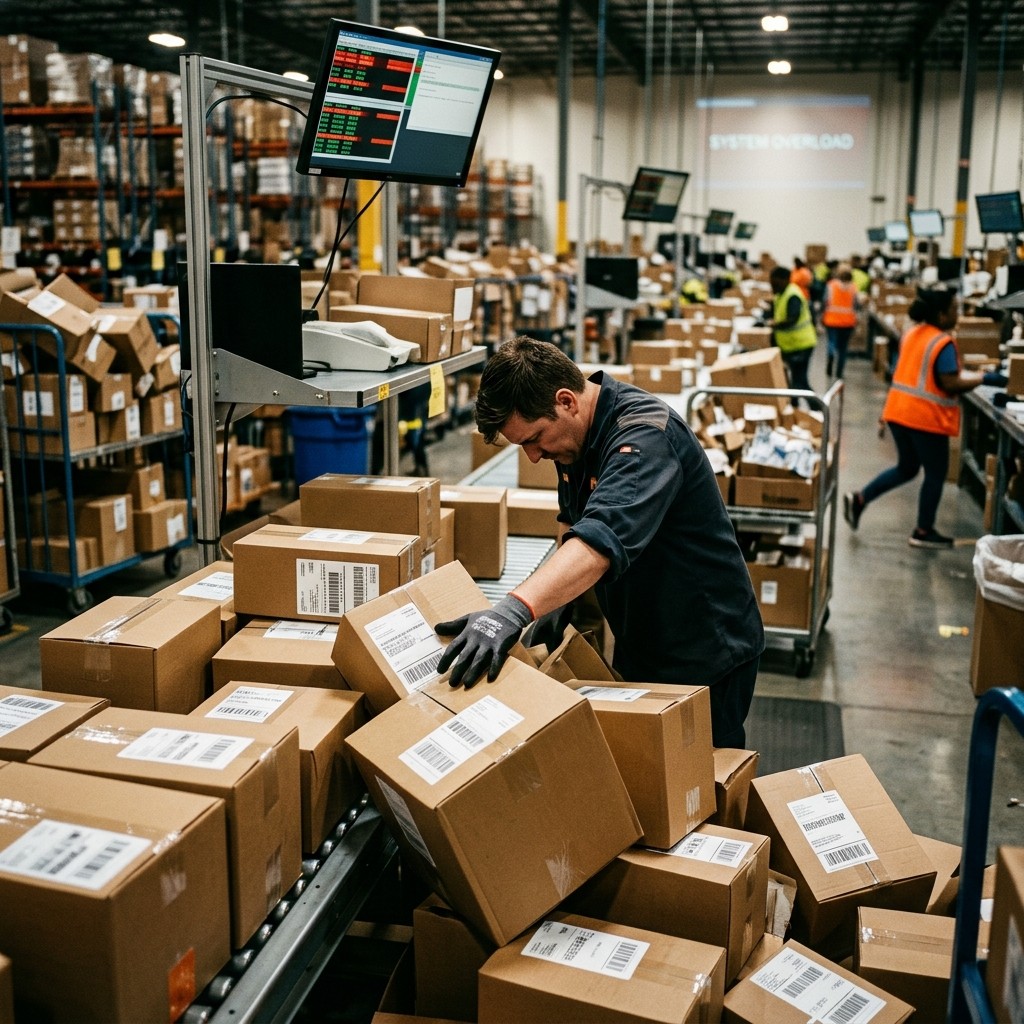
Except when I asked what happens if you get 5x your usual orders tomorrow... the room went quiet.
The fulfilment partner hadn't been stress-tested... the warehouse couldn't handle demand clustering... the customer service team was already stretched... and the tech stack? Well, it worked fine at current volumes.
This is the foundational problem most scaling retailers refuse to acknowledge: pouring fuel into a leaky engine is just an expensive way to fail.
The Real Constraint Isn't Customer Acquisition Anymore
Something significant has shifted in UK ecommerce over the past 18 months...
53% of UK ecommerce brands now cite fulfilment costs as their major barrier to growth, whilst only 10% identify customer acquisition costs as their primary challenge.
Read that again.
The constraint isn't generating demand anymore... it's fulfilling it.
Your marketing team can drive traffic... your creative can convert... but if your infrastructure collapses under the weight of success, you've just paid to damage your reputation.
What Actually Breaks First
When order volumes spike, the first cracks almost always appear in data flow between systems.
A slightly off-format file from a 3PL... a carrier delay that isn't flagged fast enough... a single mis-keyed SKU triggers a chain reaction: wrong labels, late shipments, angry customers.
For high-growth ecommerce brands, total order volume is rarely the problem... the real challenge is demand clustering—when thousands of orders land within the same 1-to-3-hour window due to paid activity, social surges, or influencer campaigns.
Your systems either handle that surge, or they don't.
And if they don't? Failing to manage traffic surges can cost ecommerce businesses up to $540,000 per hour due to downtime, whilst a 1-second delay in page load time results in a 7% drop in conversions.
These aren't theoretical risks... they're operational realities when infrastructure isn't prepared for scale.
Scaling vs. Growing: A Critical Distinction
Here's what most founders miss: scaling an ecommerce business means growing revenue and customer base without drastically increasing costs.
Unlike simple growth—where expenses rise at the same rate as sales—scaling focuses on improving efficiency, automation, and operations to handle increased demand without unnecessary overhead.
If cash flow is unpredictable, scaling too soon strains finances and creates operational risk.
I've watched brands enter Q4 with accurate data, real operational visibility, and a structured fulfilment strategy outperform those relying on assumptions and manual processes... the difference isn't luck, it's infrastructure.
The Hidden Reality of Rapid Growth
Every penny coming in goes right back out the door to keep up with scale.
Rapid growth means turning over ad spend and inventory constantly, requiring extra storage space, warehouse capacity, and staffing... it's not uncommon for multi-million, eight-figure businesses to be broke all the time because all their money's tied up in inventory.
When you scale without operational readiness, you're not building a business... you're building a cash flow crisis.
What Q2 Budget Approval Should Actually Fund
Before you pour budget into acquisition, ask yourself these questions:
Can your fulfilment partner handle 3x your average daily orders?
If you don't know the answer, you're not ready to scale.
Do your systems talk to each other without manual intervention?
Any weak link in the data chain snowballs quickly under pressure.
Can your customer service team absorb a 22% spike in ticket volume per agent?
That's what November analysis showed for brands that didn't plan ahead.
Have you stress-tested your tech stack at peak load?
If the answer is no, Q4 will do it for you—in front of your customers.
Ok it was four questions but who’s counting?
The Intervention Most Retailers Need
This isn't about slowing down growth... it's about ensuring the growth you achieve is sustainable.
Teams that held quality in December started planning in March... those that waited until October paid for it in burnout, customer churn, and rushed decisions that solved little.
If your systems are already straining, scaling isn't progress... it's a liability.
Stabilise the engine now... then add fuel.
Because more traffic won't fix a broken business model... it will just break it faster.

I had a conversation last week with a founder who'd just secured Q2 budget approval for a significant marketing push ahead of Q4.
More Traffic Won't Fix a Broken Business Model—It Will Just Break It Faster
2026
Recently I spoke with a founder who'd just secured Q2 budget approval for a significant marketing push ahead of Q4.
Brilliant news, right?
Except when I asked what happens if you get 5x your usual orders tomorrow... the room went quiet.
The fulfilment partner hadn't been stress-tested... the warehouse couldn't handle demand clustering... the customer service team was already stretched... and the tech stack? Well, it worked fine at current volumes.
This is the foundational problem most scaling retailers refuse to acknowledge: pouring fuel into a leaky engine is just an expensive way to fail.
The Real Constraint Isn't Customer Acquisition Anymore
Something significant has shifted in UK ecommerce over the past 18 months...
53% of UK ecommerce brands now cite fulfilment costs as their major barrier to growth, whilst only 10% identify customer acquisition costs as their primary challenge.
Read that again.
The constraint isn't generating demand anymore... it's fulfilling it.
Your marketing team can drive traffic... your creative can convert... but if your infrastructure collapses under the weight of success, you've just paid to damage your reputation.
What Actually Breaks First
When order volumes spike, the first cracks almost always appear in data flow between systems.
A slightly off-format file from a 3PL... a carrier delay that isn't flagged fast enough... a single mis-keyed SKU triggers a chain reaction: wrong labels, late shipments, angry customers.
For high-growth ecommerce brands, total order volume is rarely the problem... the real challenge is demand clustering—when thousands of orders land within the same 1-to-3-hour window due to paid activity, social surges, or influencer campaigns.
Your systems either handle that surge, or they don't.
And if they don't? Failing to manage traffic surges can cost ecommerce businesses up to $540,000 per hour due to downtime, whilst a 1-second delay in page load time results in a 7% drop in conversions.
These aren't theoretical risks... they're operational realities when infrastructure isn't prepared for scale.
Scaling vs. Growing: A Critical Distinction
Here's what most founders miss: scaling an ecommerce business means growing revenue and customer base without drastically increasing costs.
Unlike simple growth—where expenses rise at the same rate as sales—scaling focuses on improving efficiency, automation, and operations to handle increased demand without unnecessary overhead.
If cash flow is unpredictable, scaling too soon strains finances and creates operational risk.
I've watched brands enter Q4 with accurate data, real operational visibility, and a structured fulfilment strategy outperform those relying on assumptions and manual processes... the difference isn't luck, it's infrastructure.
The Hidden Reality of Rapid Growth
Every penny coming in goes right back out the door to keep up with scale.
Rapid growth means turning over ad spend and inventory constantly, requiring extra storage space, warehouse capacity, and staffing... it's not uncommon for multi-million, eight-figure businesses to be broke all the time because all their money's tied up in inventory.
When you scale without operational readiness, you're not building a business... you're building a cash flow crisis.
What Q2 Budget Approval Should Actually Fund
Before you pour budget into acquisition, ask yourself these questions:
Can your fulfilment partner handle 3x your average daily orders?
If you don't know the answer, you're not ready to scale.
Do your systems talk to each other without manual intervention?
Any weak link in the data chain snowballs quickly under pressure.
Can your customer service team absorb a 22% spike in ticket volume per agent?
That's what November analysis showed for brands that didn't plan ahead.
Have you stress-tested your tech stack at peak load?
If the answer is no, Q4 will do it for you—in front of your customers.
Ok it was four questions but who’s counting?
The Intervention Most Retailers Need
This isn't about slowing down growth... it's about ensuring the growth you achieve is sustainable.
Teams that held quality in December started planning in March... those that waited until October paid for it in burnout, customer churn, and rushed decisions that solved little.
If your systems are already straining, scaling isn't progress... it's a liability.
Stabilise the engine now... then add fuel.
Because more traffic won't fix a broken business model... it will just break it faster.
I had a conversation last week with a founder who'd just secured Q2 budget approval for a significant marketing push ahead of Q4.
More Traffic Won't Fix a Broken Business Model—It Will Just Break It Faster
2026
Recently I spoke with a founder who'd just secured Q2 budget approval for a significant marketing push ahead of Q4.
Brilliant news, right?
Except when I asked what happens if you get 5x your usual orders tomorrow... the room went quiet.
The fulfilment partner hadn't been stress-tested... the warehouse couldn't handle demand clustering... the customer service team was already stretched... and the tech stack? Well, it worked fine at current volumes.
This is the foundational problem most scaling retailers refuse to acknowledge: pouring fuel into a leaky engine is just an expensive way to fail.
The Real Constraint Isn't Customer Acquisition Anymore
Something significant has shifted in UK ecommerce over the past 18 months...
53% of UK ecommerce brands now cite fulfilment costs as their major barrier to growth, whilst only 10% identify customer acquisition costs as their primary challenge.
Read that again.
The constraint isn't generating demand anymore... it's fulfilling it.
Your marketing team can drive traffic... your creative can convert... but if your infrastructure collapses under the weight of success, you've just paid to damage your reputation.
What Actually Breaks First
When order volumes spike, the first cracks almost always appear in data flow between systems.
A slightly off-format file from a 3PL... a carrier delay that isn't flagged fast enough... a single mis-keyed SKU triggers a chain reaction: wrong labels, late shipments, angry customers.
For high-growth ecommerce brands, total order volume is rarely the problem... the real challenge is demand clustering—when thousands of orders land within the same 1-to-3-hour window due to paid activity, social surges, or influencer campaigns.
Your systems either handle that surge, or they don't.
And if they don't? Failing to manage traffic surges can cost ecommerce businesses up to $540,000 per hour due to downtime, whilst a 1-second delay in page load time results in a 7% drop in conversions.
These aren't theoretical risks... they're operational realities when infrastructure isn't prepared for scale.
Scaling vs. Growing: A Critical Distinction
Here's what most founders miss: scaling an ecommerce business means growing revenue and customer base without drastically increasing costs.
Unlike simple growth—where expenses rise at the same rate as sales—scaling focuses on improving efficiency, automation, and operations to handle increased demand without unnecessary overhead.
If cash flow is unpredictable, scaling too soon strains finances and creates operational risk.
I've watched brands enter Q4 with accurate data, real operational visibility, and a structured fulfilment strategy outperform those relying on assumptions and manual processes... the difference isn't luck, it's infrastructure.
The Hidden Reality of Rapid Growth
Every penny coming in goes right back out the door to keep up with scale.
Rapid growth means turning over ad spend and inventory constantly, requiring extra storage space, warehouse capacity, and staffing... it's not uncommon for multi-million, eight-figure businesses to be broke all the time because all their money's tied up in inventory.
When you scale without operational readiness, you're not building a business... you're building a cash flow crisis.
What Q2 Budget Approval Should Actually Fund
Before you pour budget into acquisition, ask yourself these questions:
Can your fulfilment partner handle 3x your average daily orders?
If you don't know the answer, you're not ready to scale.
Do your systems talk to each other without manual intervention?
Any weak link in the data chain snowballs quickly under pressure.
Can your customer service team absorb a 22% spike in ticket volume per agent?
That's what November analysis showed for brands that didn't plan ahead.
Have you stress-tested your tech stack at peak load?
If the answer is no, Q4 will do it for you—in front of your customers.
Ok it was four questions but who’s counting?
The Intervention Most Retailers Need
This isn't about slowing down growth... it's about ensuring the growth you achieve is sustainable.
Teams that held quality in December started planning in March... those that waited until October paid for it in burnout, customer churn, and rushed decisions that solved little.
If your systems are already straining, scaling isn't progress... it's a liability.
Stabilise the engine now... then add fuel.
Because more traffic won't fix a broken business model... it will just break it faster.